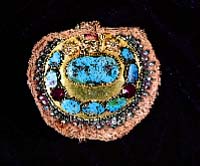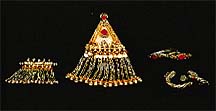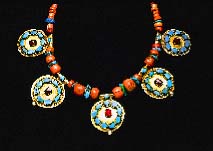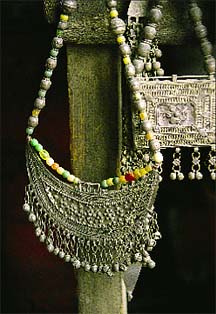
Ancient Arabia prospered as the crossroads of the world, both as a merchant of its own prized natural resources – primarily frankincense and myrrh – and as the buyer of goods from distant lands. The peninsula thrived in commerce and trade as the “gateway to the East.” Trade with Arabia also included spices, silks, ivory and other precious wares bound for markets in Egypt and the surrounding Mediterranean lands.
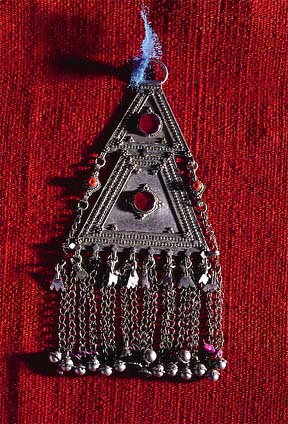
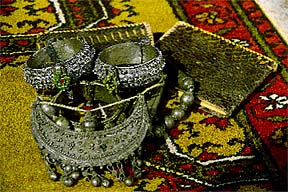
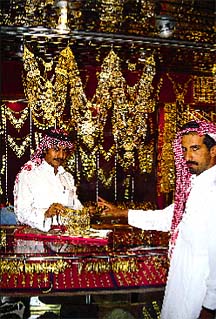
With the region’s prosperity came an indulgence in the precious materials of ancient jewelry. Not only the affluent merchant class that inhabited cities but also Arabian Bedouin women were major consumers of ornate jewelry.
In the Arabian tradition, jewelry represents more than personal decoration. For Bedouin women, their jewelry symbolizes social and economic status – when a woman marries, her dowry is partially paid in jewelry which is hers to keep or dispose of at her discretion. Due to the inherently migrant lifestyle of the Bedouin, jewelry also becomes an easily transportable form of wealth and security for its owner. Thus, a woman’s jewelry symbolizes her status as a married women and later as a mother, as it is customary to gift one’s wife with jewelry for the birth of each child.
While jewelry has traditionally been the domain of women, Arabian men, in contrast, have tended to decorate their weapons and camels rather than themselves. Such embellishments were a visual indication of a man’s wealth, power and status. In Islamic tradition, the Qur’an discourages men from adorning themselves with gold. Modern Saudi men have wedding rings made from silver in accordance with this custom.
Children have also customarily worn jewelry in Arabia. Silver bracelets or anklets, most often trimmed with tiny bells, are the most popular choice for children. The sound of the bells would protect the young wearer from evil spirits, while also providing a source of amusement for a restless child.
Arabian artisans faced no shortage of opulent material to work with. The Red Sea, which borders Saudi Arabia’s western coastline, is an endless source of coral and, in fact, provided an early industry to that region. Dark pink to red, as well as white and black, coral has been used for centuries for amulets and talismans as well as decoration. On the other coast, the Arabian Gulf offered up no shortage of magnificent pearls. These iridescent treasures were most frequently set in the finest pieces of gold jewelry. Gem fields in the southwest of the peninsula also offered a bountiful supply of stones, particularly well regarded being the turquoise from Makkah.