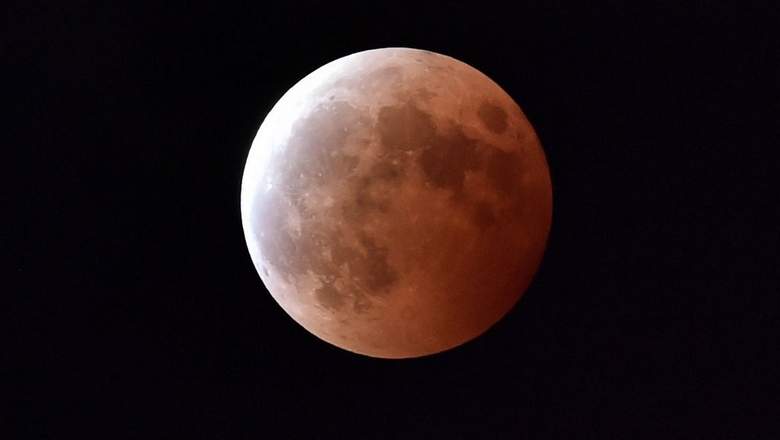
For the first time in decades, skygazers are in for the double spectacle Monday of a swollen “supermoon” bathed in the blood-red light of a total eclipse.
The celestial show, visible from the Americas, Europe, Africa, west Asia and the east Pacific, will be the result of the Sun, Earth and a larger-than-life, extra-bright Moon lining up for just over an hour from 0211 GMT.
“It will be quite exciting and especially dramatic,” predicted astronomer Sam Lindsay of the Royal Astronomical Society in London.
“It’ll be brighter than usual, bigger than usual.”
The Moon will be at its closest orbital point to Earth, called perigee, while also in its brightest phase.
The resulting “supermoon” will look 30 per cent brighter and 14 per cent larger than when at apogee, the farthest point – which is about 49,800 kilometres from perigee. Details