
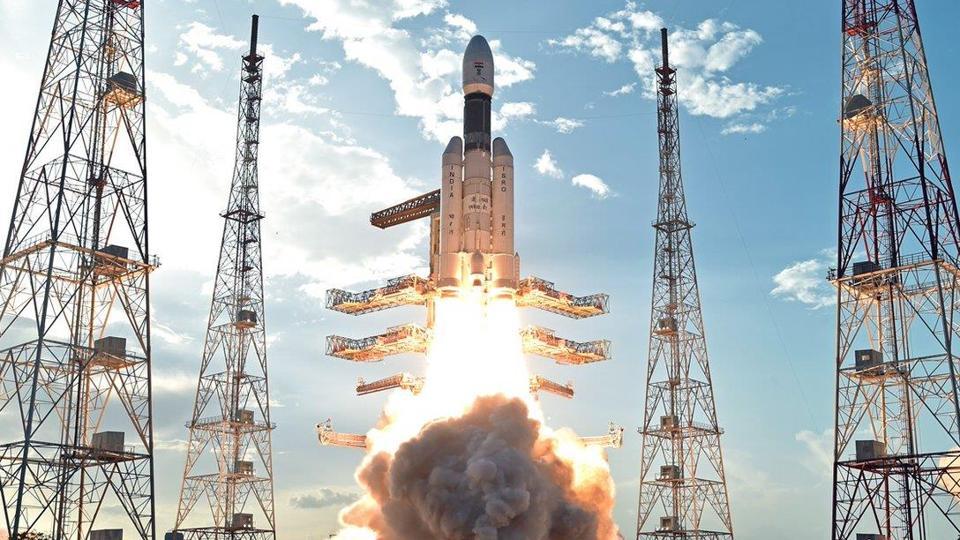
- Geosynchronous Satellite Launch Vehicle (GSLV) Mark III was launched by ISRO at 05:28 PM on 5th June, 2017, from Sriharikota in Andhra Pradesh
- Weighing 640 tonnes, the GSLV MK-III is ISRO’s most muscular launch vehicle to date, being able to lift 4,000 kg of payloads to the geostationary transfer orbit and 10,000 kg to the low-Earth orbit
- The launch of the satellite is a historic moment in India’s space programmes, increasing ISRO capacity to launch satellites by 70%
- Prime Minister Narendra Modi expressed his happiness through a Tweet: “Congratulations to the dedicated scientists of ISRO for the successful launch of GSLV – MKIII D1/GSAT-19 mission”
- The Indian Space Research Organisation is the official space agency of India, with its primary spaceport as the Satish Dawan Space Centre in Sriharikota, Andhra Pradesh
- GSLV-MK III-D1 is the first developmental flight, carrying 3136 kg GSAT-19 satellite to a Geosynchronous Transfer Orbit (GTO)
- This launch is the first-of-a-kind for India, putting it on the map of a small set of countries which are heavy-lift satellite launchers, which are US, China, Russia, Japan and Europe
- The new capability of launching over 4000 kg satellites will make it possible for India to help countries in the region launch their satellites as part of space diplomacy
- The CE-20 cryogenic engines is used in the GSLV-Mark III, the first type of which has been in the works of Indian scientists since 1982
[inbound_forms id=”38213″ name=”Auto Draft”]